|
Coming soon ...
A Clara Smith 78 Moan -
No. 1
(Two-Way Influential Links Between Clara Smith & The Rural Blues)
- by Max
Haymes
The first of a series of
short snippets from a forthcoming book on the life of Clara Smith.
|
|
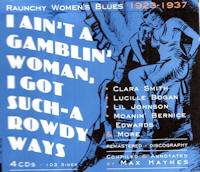
I Ain't A Gamblin' Woman,
I Got Such-A Rowdy Ways
(Raunchy Women's Blues 1923-1937)
- by Max Haymes
This is the full essay published in short form as the liner
notes for 'I Ain't A Gamblin' Woman I Got Such-A Rowdy Ways'
on
JSP Records
4 CD boxed set.
On reflection
I think I should amend my sub-heading for this 4-CD set
to “raunchy and dangerous black women’s blues”.
Many of the selections are fraught with danger - of the terminal kind -
whereas ‘raunchy’ usually conveys highly sexual/sensual material of
which examples are here a-plenty ...
|
 |
Coming soon ...
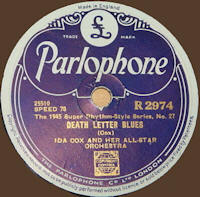
Death Letter Blues (a
survey of possible origins)
- by Max
Haymes
The first recordings of
this title appeared in 1924 by vaudeville singers. ...
|
|
Blues Specialist Record Shops in the UK - 1960s
- by Max
Haymes
A rough estimate of the
number of record shops which specialised in blues in England during the
1960s, as far as I can recall, numbered about 10! This among many
hundreds of record shops/stores in the UK. There were no other outlets
at that time. Virtually all the rest did not include a ‘Blues’ section
in their racks, although a very mixed ‘jazz' section was included which
was heavily slanted towards ‘modern jazz’ in most of its various (often
disputed) forms ...
|
 |
I've Got The Blues, But
I'm Too Damn Mean To Cry
(Protest in early blues & gospel)
- by Max Haymes
The
word 'protest' in the 21 ". century is often linked with, and refers to
'political protest'. But this is really a tautology or two words strung
together meaning the same thing. Erroneously, people refer to being
political as involvement by a group, or party, retaining power of
government or aspiring to acquire this power for themselves.
But politics is a much
broader concept. It covers virtually everything in our daily lives from
birth to death. Public health and safety, education, transportation,
energy, agriculture, social and environmental issues, are major aspects
governing the degree of quality we experience in our time on the planet.
Indeed, for African Americans in the first 3 centuries of enslavement,
politics and protest meant life itself. While the former spent much time
talking of what could be achieved, the latter attempted to have this
talk transformed into action....
|
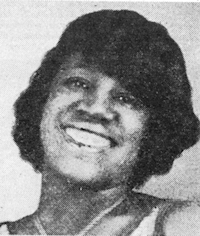
Clara Smith 'Queen of the Moaners' c.
1923 |
Coming soon:
Travelogue: Researching
the life of Clara Smith
- by Max Haymes
|
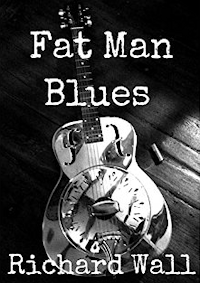 |
Fat Man Blues
A 'taster' for a blues novel by Richard Wall
"Hobo John" is an English
blues enthusiast on a pilgrimage to present-day Mississippi. One night
in Clarksdale he meets the mysterious Fat Man, who offers him the chance
to see the real blues of the 1930s. Unable to refuse this offer, Hobo
John embarks on a journey through the afterlife in the company of
Travellin' Man, an old blues guitarist who shows him the sights, sounds
and everyday life in the Mississippi Delta. Along the way, the
Englishman discovers the harsh realities behind his romantic notion of
the music he loves and the true price of the deal that he has made.
Check out the
Recommended Books
Section for more
information.
|
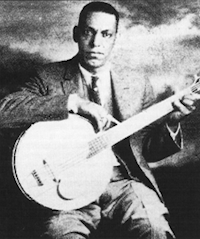
Papa Charlie Jackson
c. 1924
|
Why Do You Moan, When You Can Shake That Thing?
(a survey of Papa Charlie Jackson & Bo Weavil Jackson: 1924-1934)
- by Max Haymes
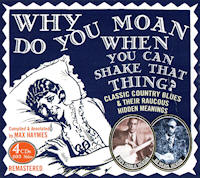 One of the interesting facts to emerge from putting Papa Charlie Jackson
and Bo Weavil Jackson together in a CD set, is the obvious different
approaches they applied to the recently-arrived phenomenon - the country
or rural blues. Both artists were growing up in the South when the
Blues were relatively young. Still, there would seem to be little
commonality between William Henry and James Jackson - presumed to be
their respective given names. ... One of the interesting facts to emerge from putting Papa Charlie Jackson
and Bo Weavil Jackson together in a CD set, is the obvious different
approaches they applied to the recently-arrived phenomenon - the country
or rural blues. Both artists were growing up in the South when the
Blues were relatively young. Still, there would seem to be little
commonality between William Henry and James Jackson - presumed to be
their respective given names. ... |
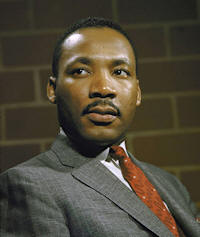
Martin Luther King
Jr. |
Blues For Martin Luther King, Jr.
- by Terry Messman
In the despairing days after Dr. King’s death, the nation was overcome
by the blues, so it was fitting that the pre-eminent blues band in the
land would play for the activists in Resurrection City.
|
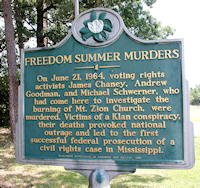
|
We'll March on Resurrection Day
- by Terry Messman
The final stanza is like a dream. Big Joe Williams looks down at Martin
Luther King’s face, and vows to the slain civil rights leader that we’ll
keep marching on - even unto Resurrection Day.
|

Voyager Golden
Record |
Dark Was the Night, Cold Was the Ground
- by Terry Messman
Dark was the
night and cold was the ground on which Blind Willie Johnson was laid.
Yet after his death, his music would streak to the stars on the Voyager
and become part of the “music of the spheres.”
|
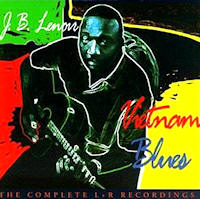
J.B. Lenoir Vietnam
Blues |
Blues From the Streets of 'The Other America'
- by Terry Messman
J. B. Lenoir
was one of the bravest political voices of his era. He sang against
poverty, lynching, the Vietnam War, racism and police violence in
Alabama and Mississippi.
|
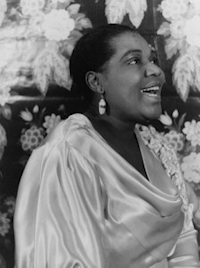
Bessie Smith by Carl
Van Vechten
|
Cold Ground Was My Bed: The Blues and Social Justice
- by Terry
MessmanA powerful
torrent of “justice blues,” as deep and wide as the Mississippi itself,
flows in an unbroken stream from the Depression-era blues of Bessie
Smith and Skip James all the way to the 21st century blues of Otis
Taylor and Robert Cray.
|
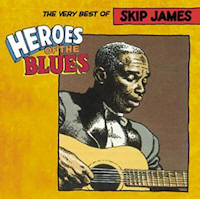
|
Nobody Knows You When You're Down and Out
- by Terry
MessmanIn “Hard
Times Killing Floor Blues,” Skip James sings for the multitudes forced
out of their homes and jobs — locked out of heaven itself and trapped on
the killing floor of poverty. |
 |
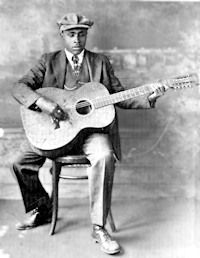
Gulfport
Island Road Blues
(Nonsense & Robert Johnson)
-
by Max Haymes
There has
been, down through the years, a belief by many white people that
blacks from the southern states often sang nonsense lyrics. From an
otherwise very sympathetic Fanny Anne Kemble in the 1830s, on down
to 1888 when another Englishwoman tracing the sea shanty, reports
"The "chanty-men" have, to some extent, kept to the silly words of
the negroes, and have altered the melodies to suit their
purposes." ...
|
Blind Willie McTell
|
Tracing The Origins Of
Dying Crapshooters' Blues Back To English And Irish Folksong In The
Eighteenth Century
- by Max Haymes
Blind Willie McTell's
first known recording of
Dying Crapshooters' Blues was in November 1940, and as part of
his introduction to this version he states "I am gonna play this song
that I made myself, originally this is from Atlanta". This statement
also has strong significance when tracing the path of Crapshooter's
origins ...
|
|
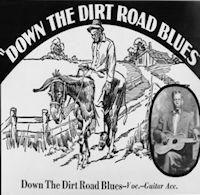
Mule, Get Up In The Alley
(a Tribute to the Mule in the
Blues)
- by Max Haymes
The ‘lowly’ mule is a ubiquitous icon in the early blues and reaches
back into slavery times. This animal appears in many blues such as
those by Coley Jones, Kokomo Arnold, Memphis Minnie, Billiken Johnson,
Sonny Boy Williamson, Jazz Gillum, Texas Alexander, Julius Daniels, and
Edna Winston ...
|
|
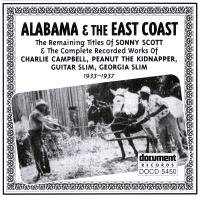
Alabama Blues - by Billy Hutchinson
... with contributions from Bob Eagle,
Gayle Dean Wardlow, Don Kent, Alabama Blues Project's Debbie Bond,
Alabama Mike Benjamin, Roger Stephenson and Microwave Dave.
This is the land of
tornadoes, thunderstorms, scorching summers, packed churches, magnolias,
kudzu, pecans, cicadas, squirrels and chipmunks that outnumber the dogs
and cats, trees that want to grow forever and soul food ....
|
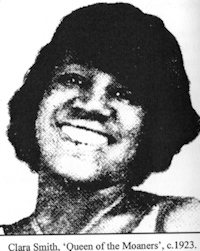
Clara Smith 'Queen of the Moaners' c.
1923
|
I Need-A Plenty Grease In My Frying Pan
(Roots and Influences of Vaudeville & Rural Blues: 1919-1940)
- by Max Haymes
Black female singers in the
first decades of the 20th Century -during which time the
Blues had 'arrived'- were generally part of their community at the
lowest rung on the socio-economic ladder. I am here,
talking about the vast majority of black women and the female blues
singers in particular, who sang and recorded the first blues on records;
formerly ‘the classic blues’ and more correctly now the ‘vaudeville
blues’.
|
|
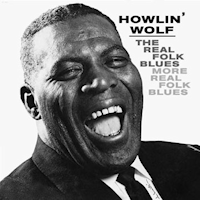
The Mississippi Delta: Birthplace of the Blues
- "This Is Where the Soul of
Man Never Dies."
- by Terry Messman
This is a story about how poverty, segregation and racial discrimination
harm human beings. This is also a story about how beauty flowers from
the fields of brutality. This is a story of the blues. “This is where
the soul of man never dies,” as Sam Phillips said about Howlin’ Wolf.
Click
here for Spanish translation
(thanks to
Rafael Reséndiz,
professor at the National University of Mexico for the translation).
|
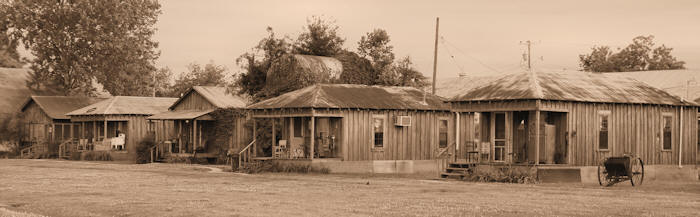
Slave Shacks, Hopson Plantation,
Clarksdale, Mississippi © Copyright 2008 Alan White. All Rights
Reserved.
|
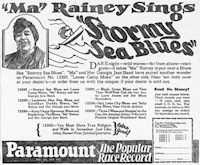 |
Blues At Sea
- by Max Haymes
Although the sea-shanty is a form of work-song and the latter is a
universal phenomenon in one form or another, the 'shanty is never
ascribed any origins from the African continent. For whatever reasons,
the various versions of the beginnings of the shanty point to many a
geographical birthplace - except Africa. In fact it is not until African
slaves were forcibly removed from their homelands that they got involved
with work-songs of the sea ...
|
|
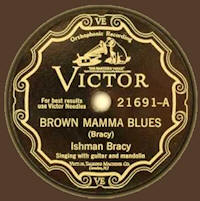
"I'm Gonna Hang This Mandolin Under
My Shoulder"
(Mandolins in the Blues)
- by Max Haymes
Although the blues on record
started in 1920, it was not until 1924 when Willie Black was included on
mandolin as part of Whistler and His Jug Band, from Cincinnati, in an
ensemble role for a series of sides in September of that year. |
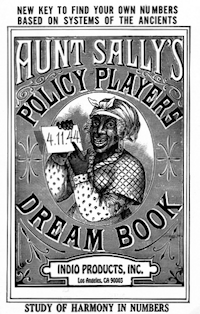
|
British Superstitions and The Blues
- by Max Haymes
..... I maintain that many superstitions,
beliefs and customs were transported from the British Isles over to
southern USA in the nineteenth century, and earlier. |
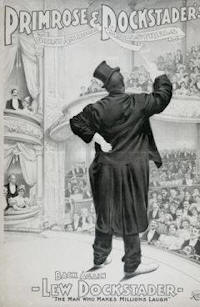
|
Lil McClintock, Blues and Medicine Shows
- by Mike Ballantyne
The roots of the blues are many and varied. The two most prominent
genres from which they sprang are Black folksongs, including both
play-party songs and animal rhymes, and work songs. Many of these latter
songs evolved from the singing of railroad track-lining gangs, sugarcane
cutters, cotton pickers, road gangs, quarry and mine workers and the
like, commonly within the prison systems of the American South and South
West. |
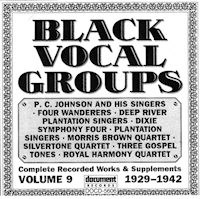
|
History & Mystery
(a long shot in early blues & gospel)
- recordings of the Dixie Symphony Four by Max Haymes
Sometime ago in the mid-1930s, (or a few years earlier) an
African American group known variously as the Dixie Symphony Four or Dixie
Symphony Singers recorded six performances for a record company on a radio
station in San Francisco, California.
|
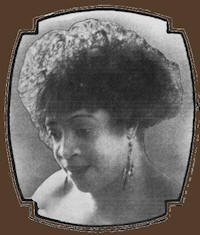
Ida Cox c. 1924
From the collection of John Tefteller and Blues Images with permission,
www.bluesimages.com
|
Ida Cox / Old Bingham Town & The Nickel Plate Road
- by Max Haymes
... a very belated
response to a query from Paul Garon, listed in ‘Words Words Words’,
Blues & Rhythm magazine No. 188. April, 2004. After listening to
Chicago Bound Blues by female singer Yack Taylor (1941), he said
that the recording “begins with Yack singing that she wants to leave old
Bingham town, or at least it sounds like that. Heading for
Chicago, of course. But I can’t find a Bingham Town anywhere”.
|

|
Ghost
Trains of Mississippi
- by Michael Gray
I’m travelling by train through
Mississippi, accompanied by the ghosts of those who sang the blues here
before I was born: those who migrated north to Chicago and elsewhere on
these trains and those who stayed behind, in the little towns where the
trains still stop. |
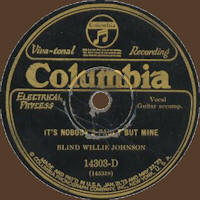
|
Roots of Blind Willie Johnson - by
Max Haymes
.....
there were indeed quite substantial
number of songs and artists who influenced the Texas bottleneck guitar
ace, forming an important factor in the roots of Blind Willie Johnson. |
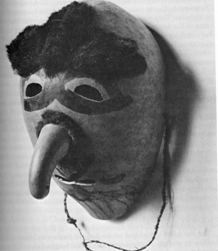
“Cherokee gourd booger dance mask ....”
|
Booger Rooger Blues
- by Max Haymes
The term came to light - for Blues fans - via the recording by Blind
Lemon Jefferson on the very first reissue on the old Austrian Roots
label (Roots RL 301 L.P. Blind Lemon Jefferson Vol.1. c.1965.
This was Booger Rooger Blues ..... |
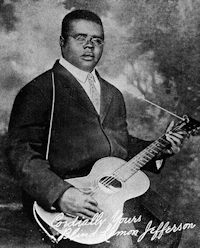
Blind
Lemon
Jefferson (1890-1929)
|
British Colloquial Links and The Blues
- an in-depth study by Max Haymes
Although,
geographically and culturally, Africa is the place that is usually
associated with the roots of the Blues, by the layman, this is
acknowledged for the most part to be on a musicological basis, by the
Blues writers and aficionados. Even then traces of Africa are only
glimpsed momentarily, like the sun on a cloudy day. Some African words
have been retained in black American culture, including that of the
Blues singer, but they are exceptions rather than the rule. |
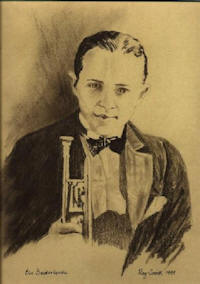
Bix Beiderbecke
Chalk pastels by Ray Smith 1999
|
The Blues & Jazz Poetry of Langston Hughes (Part
4)
- a personal appreciation by Ray Smith
In 1930, funded by Mrs Mason, Langston Hughes went to Cuba and met many
writers and artists there. His blues poems influenced one poet, Nicolás Guillén,
to write ‘Motivos de Son’ (1930), hailed as the first ‘Negro’ poems in Cuba.
Here are two poems from that period. |
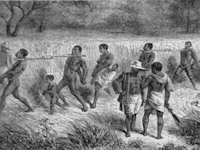
Slave coffle using wooden 'chains'
|
This article is
part of a far larger work ('Slave To The Blues') which seeks to focus on the
secular roots of the Blues back in slavery times in the USA. |
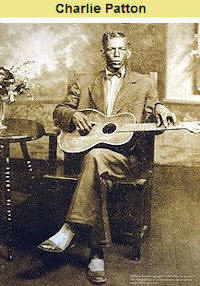
A mix of White, Black and Choctaw
|
The Red Man and the Blues
the link between the North American Indian and the Afro-American, an
in-depth study by Max Haymes
The North American Indian and the Afro-American, including the Blues
singer, are two of the largest ethnic minorities in the United States.
The aim of this study is to point up a far stronger link between the two
of them than has been supposed, or even considered in the past.
|
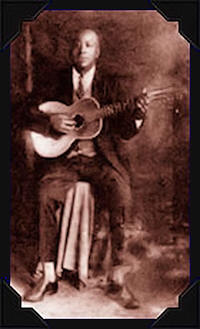
Jim Jackson
|
This
seemingly humorous title actually has some dark undertones; as with many
apparently comedic blues
in the earlier era (1890-1943). The
title and first line were adapted from a religious song I Heard The
Voice Of Jesus Say .....
|
 |
The Titanic and The Blues
- by Mike Ballantyne
On April
the 10th 1912 the Royal Mail Steamer Titanic sailed on her
maiden voyage from Southampton. Shortly before midnight on the 14th of
April she struck an iceberg and, a little over two and a half hours
later, she sank with the loss of 1,517 passengers and crew. Considering
the enormity of the disaster it is not surprising that a great number of
songs were either written about the tragedy or referred to it in one
form or another.
|
|
|
The Birds and The Blues - by Max
Haymes |
|
|
Hogan's Heroes - a tale
about not letting Best Bitter go bad by Ray
Smith
|
|
|
West Pennine
Boogie Blues
a tale about Champion Jack Dupree - by Ray Smith
|
|
|
Only Maloney
- a tale about how Only Maloney got his nickname
- by Ray Smith |
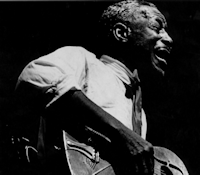
Son House:
"blues is a low-down old achin'
chill" |
There are two words that are
particularly difficult to define in the English language; 'poetry' and 'blues'.
To attempt to classify these two together is even more difficult yet a large
number of blues critics claim that blues lyrics are poetry. This paper proposes
to examine the definitions of 'poetry' and 'blues' and to consider the extent to
which it is justified to link the two.
|
|
|
I Woke Up This Morning -
Introduction to Blues for the Newcomer
- by Max Haymes &
Alan White |
|
|
An Introduction to Bob Dylan's use of Pre-war Blues
- by Michael Gray
Because it’s so crackly on record, so
lo-fi, so immured behind a white-noise wall, the black noise that is the pre-war
blues can seem inaccessible, unreachable. To be put off by this would be to lose
great riches. Sometimes it’s best to play it really loud (and maybe go
into the next room): then you’ll hear all the joys and mysteries of esoteric
vocals, guitar magic, sheer moody weirdnesses: all the synapse-crinkling
giddy-hop that rock’n’roll gave you when you were thirteen.
|
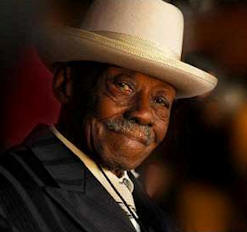
Joe Willie
Perkins
(Pinetop Perkins)
|
There are so many blues
artists that had nicknames or had adopted alternate names that I thought
it would be interesting to list some of them and identify where their
nicknames came from. |
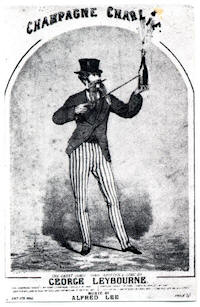
Promotional advert
for
'Champagne Charlie'
|
The English Music Hall Connection
- by Max Haymes
Of
all the subjects in these studies, the music hall is probably the
farthest away from Africa. Or put another way, it is the link with the
Blues which can be considered the most 'non-African'. ...
The phenomenon of the music hall was originally a peculiarly English
institution of the working-classes which seems to have been centered in
London and from there spread to other towns and cities throughout the
British Isles.
|

Moorhead, Mississippi
"Where the Southern Crosses
the Yellow
Dog"
©
Copyright 2008 Alan White.
All Rights Reserved
|
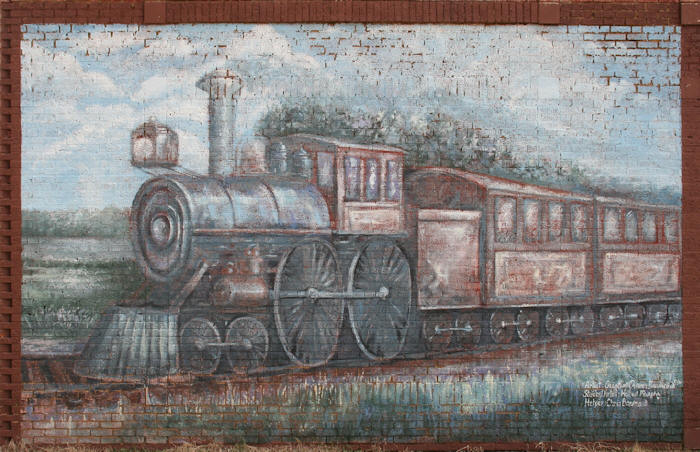
Ghost Trains of Mississippi
- by Michael Gray
I’m travelling by train through
Mississippi, accompanied by the ghosts of those who sang the blues here
before I was born: those who migrated north to Chicago and elsewhere on
these trains and those who stayed behind, in the little towns where the
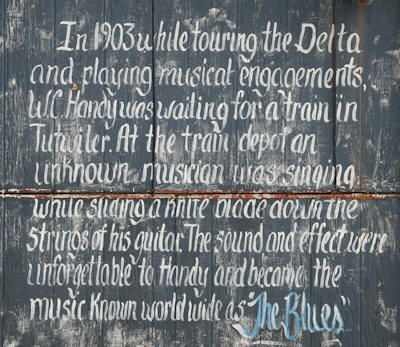
trains still stop. These railroads are entwined with
music. It was at a station in Tutwiler, Mississippi, around 1903, that W.C.
Handy first heard a blues holler - and the words were about the railroads:
‘I’m goin’ where the Southern cross the Dog…’
|
|
|
|
|
|
Jump blues – it’s a term
you hear more and more of these days, but what exactly is it? Like many classic
American musical forms, jump blues is a hybrid - an inspired mix of blues, swing
and jazz. The end result is an intensely exciting, buoyant music which noted
music writer, Billy Vera sums up like this, “Marked by a front line of horns
(heavy on the saxophones), backed by a strong rhythm section and propelled by a
strong ‘back beat’ on drums, the jump combos were long on danceability and short
on subtlety.”
|
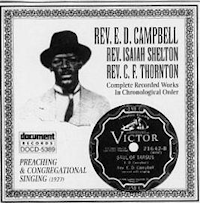 |
Survey of Black
Preachers in the South-before 1940
- by Max Haymes
This article is an initial ‘testing the
water’ on a subject in earlier African American song which has rarely been
considered in print up to this point in time. – the preacher in the late 19th.
and early 20th. centuries. ...
Although intended as a larger work (possibly a book) I will here, be
concentrating mainly on the origins of rap together with some early
background to the importance of the preacher in early black communities;
especially from the blues and gospel vantage point. I will also be
considering a particular theme which gets tangled up with the well-known
‘Dry Bones In The Valley’, much-recorded in the pre-war era by black
preachers and quartets alike.
|
|
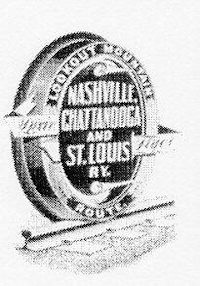
Got
the Blues for Chattanooga
-
by Max Haymes
This article was inspired by a poetic
and far-sighted verse recorded by a blind blues singer in the late 1920s!
Twelve-string maestro, Blind Willie McTell recorded his beautiful “Drive Away
Blues” for Victor Records in 1929.
|
|
Background
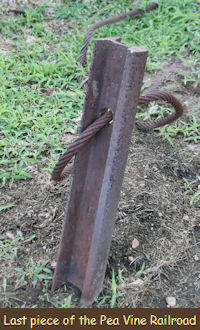
of Recorded Blues: No. 1 - Pea Vine Blues
- by Max Haymes
|
|
|
Background of Recorded Blues:
No. 2 - Mobile and Western Line
- by Max Haymes
|
|
|
Background of
Recorded Blues: No. 3 - Beaver Slide Rag
- by Max Haymes
|
|
|
Background of
Recorded Blues: No. 4 - P. C. Railroad Blues
- by Max Haymes
|
|
|
Background of Recorded Blues: No. 5 - Nut Factory Blues
- by Max Haymes
|
|
|
Background of
Recorded Blues: No. 6 - Big Ship Blues
- by Max Haymes |
Blind Gary Davis
|
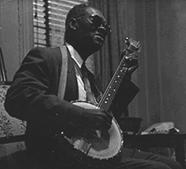
Blues
Artists & Their Instruments
- by Dai Thomas
This started as a
list of acoustic or acoustic-based blues artists with an informed
(mostly) guess at the make of the instruments they used during the
“Acoustic Era”, i.e. prior to The Second World War. The list now has
almost 200 artists!! |
Tommy McClennan
|
Catfish
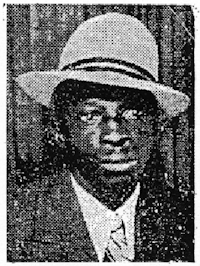
Blues (Origins of a Blues) - by Max Haymes
... McClennan's rasping vocal veering between the
menacing and the sensual, in the familiar dark melodic strains that have become
associated with this famous blues. His spoken self-encouragement might refer to
the fact he featured slide for the only time on a record, or that this was his
most popular number in the jukes and barrelhouses in the Delta. |
|
|
“Now
Look-A Here, Blues.
I Wanta Talk To
You”*
- by Max Haymes
* “Conversation With
The Blues” Big Bill. 1941.
|
|
|
T
C I Blues
- by Max Haymes
|
 |
Back
to the Land of California
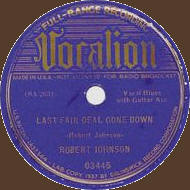
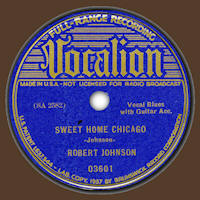
- Robert Johnson & "Sweet Home Chicago" - by Max Haymes
Robert Johnson’s phrase “back to
the land of California to my sweet home Chicago”, (the latter three words of
which give the title to his Vocation record from 1936) has in the past, been
queried by Blues writers as to his geographical sanity!! But as I maintain that
the Blues singer rarely sang lyrics which were meaningless, Johnson had a reason
for singing such a line. This article is an attempt, if you like, to ‘justify’
Johnson’s apparent nonsensical phrase.
|
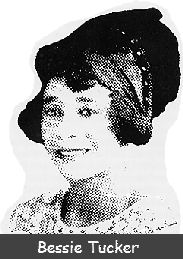
|
"Katy's
at the Station, Santa Fe is in the Yard"
(on the rail trail of Bessie Tucker - Queen of the Texas Moaners)
-
by Max Haymes
|
Moorhead, Mississippi
"Where the Southern Crosses
the Yellow
Dog"
©
Copyright 2008 Alan White.
All Rights Reserved
|
"This Cat's Got the Yellow Dog Blues"
- origins of the term Yellow Dog
- by Max Haymes
Railroads
have always been an integral part of the blues; not only in inspiring the boogie
rhythms of countless rural guitarists, barrelhouse pianists and harp blowers,
but also the lyric content of the blues singer. The earliest blues that has been
noted featured one of the most famous railroads; Mississippi’s “Yellow
Dog”. In this article I shall be not only seeking out the origin of the term
but I will also attempt to identify the railroad it refers to.
|
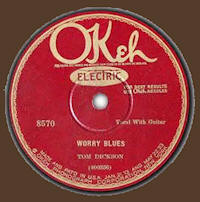 |
"Worry Blues"- an in-depth study of Tom Dickson's recorded output
- by Max Haymes
|
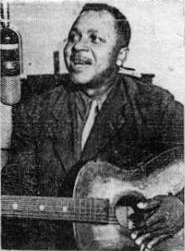
Big Joe Williams
|
Baby
Please Don't go (Origins of a Blues)
-
by Max Haymes
”Baby Please Don’t Go” was first recorded by Mississippi’s
Poor/Big Joe Williams in the autumn of 1935 for Victor’s cheap-priced Bluebird
label. This was William’s second session on record, having cut a largely solo
one in the early part of the same year, But here he is backed by Chasey
Collins on fiddle and “Kokomo” on washboard to give a decidedly rural and
‘archaic’ feeling to the piece. |
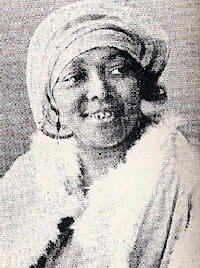
Lucille Bogan
|
Spotlight
on Lucille Bogan (Part 1)
- by Max Haymes |
|
|
Spotlight
on Lucille Bogan (Part 2)
- by Max Haymes |
|
|
Spotlight
on Lucille Bogan (Part 3)
- by Max Haymes |
|
|
Spotlight
on Lucille Bogan (Part 4)
- by Max Haymes |
|
|
Spotlight
on Lucille Bogan (Part 5 - Conclusion)
- by Max Haymes |
|
|
Blues
Where You From?
- by Max Haymes
The Blues originated in the
Southern states of the U.S.A. as sung by working-class African Americans. The
term ‘blues’ was first applied to a style of music in the closing decades
of the 19th. Century, but older blues singers ‘rediscovered’ in the 1960s
claimed the blues has been going “for centuries an’ centuries”.
|
|
|
Got The Blues For Mean Old Stack O' Lee
- by
Max Haymes
Stack 0’ Lee of course, is
the notorious badman who attained legendary status around the turn of the
century, and who has been much eulogised and sung about in black folklore;
especially in the world of the Blues.
|
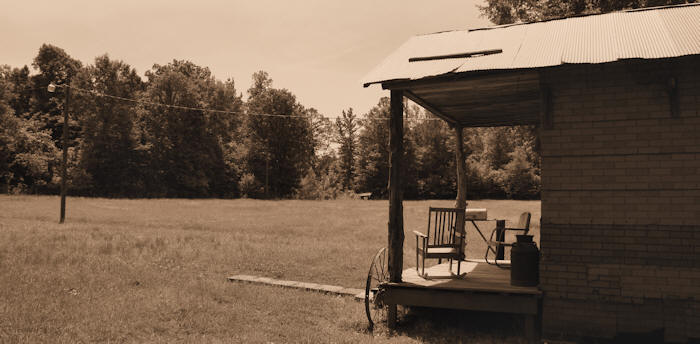
Home of Mississippi John Hurt,
Avalon, Mississippi © Copyright 2008 Alan White. All Rights Reserved.
|
|
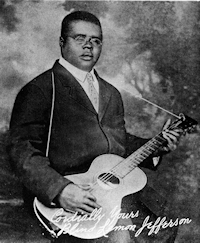
Lemon's Hoodoo Moan
(Hoodooism
and the Blues of Blind Lemon Jefferson)
-
by Max Haymes
While I have
always been aware of hoodoo in the blues, via references to ‘mojos’, ‘black cat
bones’ etc., I didn’t realize just how many more obscure (or less obvious)
allusions existed within the genre.
|
|
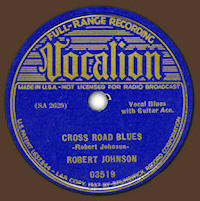
Robert
Johnson, His Life, His Music, His Legacy
-
by Alan White Information on the events of Robert Johnson's
life is rather scarce. From birth
to his still-disputed burial place, his life has remained shrouded in mystery
for more than half a century. Indeed, some early blues researchers encountered a
difficult time finding any information about him, even in the years immediately
after his death.
|

Original Hazelhurst Railroad Sign, Hazelhurst, Mississippi © Copyright
2008 Alan White. All Rights Reserved.
|
|
|
Some Blues Roots of Rock 'N
Roll Music - by Max Haymes
Ever since
the middle 1950’s when rock ‘n roll hit the sound waves, Western music, and
particularly the U.K./U.S. scene, have been irrevocably altered. Many titles
have passed into near legendary status, such as “Rock Around The Clock”, by
Bill Haley, “Be-Bop-A-Lula” by Gene Vincent and “Blue Suede Shoes” by
Elvis Presley.
|
 |
Hoboes and Their Constant
Struggle with Railroad Workers
- by Alan White
For southern Blacks
the appeal of the railroads has always been both a real and a symbolic
one. Way back in slavery periods, when black slaves were unable to
travel between districts without written 'bonds' from their owners, the
sight of powerful locomotives thundering past, with clouds of black
smoke billowing into the air, created an awe which remains even today.
|
|
|
One Way / Country Rock Blues
-
by Max Haymes
|
|
|
Blues essays in Spanish -
translations by Argentinian
Andres Magallanes
(Ensayos sobre el Blues, en
español) |
|
|
Background to the Blues - by Max Haymes The reality of life for
working-class blacks in the Southern states of the USA – putting the lyrics of
the early blues into perspective.
|
|
|
Coming soon:
Essay relating to Solomon Northup - 12 Years a Slave |
|
|
|